
Pregnancy can make even a simple skincare decision feel complicated. A moisturizer that worked perfectly before pregnancy may suddenly raise questions about ingredients, fragrance, acne treatments, or skin sensitivity. If you are asking, “I’m a pregnant woman. Are Nivea products safe compared to Burt’s Bees or Mustela?”, the most important answer is that the brand name alone does not determine pregnancy safety. Instead, you should check the ingredients and the specific product. Nivea, Burt’s Bees, and Mustela all sell many different formulas, and those formulas can vary considerably. In addition, trusted medical organizations recommend avoiding certain ingredients during pregnancy while allowing many basic moisturizers and cleansers.
Are Nivea Products Safe During Pregnancy?
Generally, many ordinary Nivea skincare products can be suitable during pregnancy, particularly simple moisturizers, body lotions, and gentle cleansing products that do not contain ingredients your healthcare professional has advised you to avoid. However, it would be inaccurate to call every Nivea product pregnancy-safe without checking its current ingredient list. Formulas can differ by product, country, and product version. Therefore, read the label before using a new item. The U.S. Food and Drug Administration also advises consumers to check cosmetic ingredient labels and follow product directions. Most importantly, pregnancy changes your skin, so a product that previously felt comfortable may now cause dryness or irritation.
Nivea also offers products designed for different purposes, including hydration, cleansing, anti-aging, acne care, and sun protection. Consequently, you should not judge a whole brand from one product. A basic body lotion and an intensive facial treatment can have completely different active ingredients. For example, pregnancy skincare guidance from the American Academy of Dermatology recommends avoiding retinoids, including retinol, during pregnancy. Therefore, if a Nivea product contains retinol or another retinoid, choose a different product unless your healthcare professional specifically tells you otherwise. The same ingredient-checking approach applies to Burt’s Bees and Mustela.
How Do Burt’s Bees Products Compare During Pregnancy?
Burt’s Bees focuses heavily on ingredients derived from nature, but natural does not automatically mean pregnancy-safe. The company says its formulas are made without parabens, phthalates, petrolatum, or sodium lauryl sulfate, and many formulas contain plant oils, beeswax, butters, and other naturally derived ingredients. However, the brand also explains that many of its fragrances come from essential oils and botanical extracts. Therefore, pregnant consumers should still read the ingredient list instead of assuming that every Burt’s Bees product is suitable. This distinction matters because pregnancy can increase skin sensitivity, while some essential oils and strongly fragranced products may irritate sensitive skin.
For example, Burt’s Bees currently sells a fragrance-free Hydrating Face and Body Cream containing ingredients such as glycerin, jojoba oil, coconut oil, aloe, beeswax, and honey. The company describes this particular formula as suitable for sensitive skin. That does not mean every Burt’s Bees skincare product has the same formulation. Instead, it shows why comparing individual products makes more sense than comparing entire brands. If you are pregnant and want a Burt’s Bees moisturizer, look for a simple formula with familiar moisturizing ingredients and avoid unnecessary actives that your obstetrician or dermatologist has told you to avoid.
Why Mustela Is Often Chosen for Pregnancy Skincare
Mustela takes a more pregnancy-specific approach than many general skincare brands. The company states that most Mustela products are safe during pregnancy and breastfeeding, while its maternity collection is specifically designed for expecting mothers. Mustela also says its formulas undergo extensive safety testing and independent toxicologist evaluation. Its maternity products include creams, oils, and lotions intended for changing skin during pregnancy and after birth. For example, the brand’s maternity essential care lotion is described as safe for mother and baby, fragrance-free, and compatible with breastfeeding.
Mustela’s pregnancy-focused positioning can make product selection easier because you can start with a collection created specifically for maternity care. However, that does not mean Mustela automatically becomes the right choice for every pregnant woman. Individual skin needs still matter. Someone with acne may need different ingredients from someone dealing mainly with dryness or stretch marks. Likewise, someone with eczema may need a fragrance-free cream rather than a scented maternity lotion. Therefore, consider Mustela’s pregnancy-specific design as useful guidance, but still read the ingredients and listen to your healthcare professional.
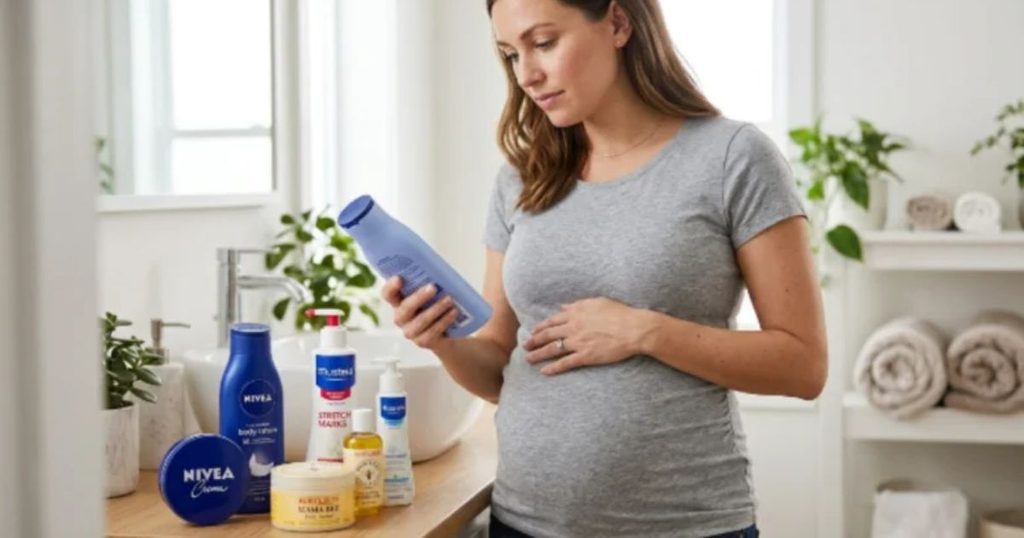
Nivea vs Burt’s Bees vs Mustela for Pregnant Women
When comparing Nivea, Burt’s Bees, and Mustela during pregnancy, there is no universal winner because each company offers different types of skincare. Nivea provides a broad range of everyday skincare, so you need to evaluate products individually. Burt’s Bees emphasizes naturally derived ingredients, but its formulas can include botanical extracts and essential-oil-derived fragrance components. Mustela offers a dedicated maternity range and specifically states that most of its products are suitable during pregnancy and breastfeeding. Therefore, the most useful comparison is based on the actual product, ingredients, purpose, and your skin condition. This approach is more reliable than choosing a brand simply because it appears “natural,” “clean,” or pregnancy-focused.
| Brand | What to know during pregnancy | What to check |
|---|---|---|
| Nivea | Many basic skincare products may be suitable, but formulas vary | Check the complete ingredient list |
| Burt’s Bees | Many naturally derived formulas; some products contain fragrance or botanical ingredients | Check fragrance and active ingredients |
| Mustela | Offers products specifically designed for pregnancy and maternity care | Check the individual formula and your skin needs |
Which Skincare Ingredients Should Pregnant Women Avoid?
One of the most important steps is learning which ingredients deserve extra caution. The American Academy of Dermatology advises pregnant women to avoid retinoids, including prescription retinoids and over-the-counter retinol products. It also advises avoiding hydroquinone during pregnancy. Some other ingredients, such as high-dose salicylic acid, benzoyl peroxide, parabens, phthalates, phenol, triclosan, and certain essential oils, may require limited use or discussion with a dermatologist. Meanwhile, ACOG states that topical benzoyl peroxide, azelaic acid, topical salicylic acid, and glycolic acid can be used for acne during pregnancy, showing that medical guidance can differ according to concentration, use, and individual circumstances.
Retinol and Retinoids
Retinol deserves particular attention because it appears in some anti-aging skincare products. Retinoids are vitamin A derivatives, and dermatologists recommend avoiding them during pregnancy. AAD specifically includes retinol among the ingredients pregnant women should avoid. Therefore, check Nivea, Burt’s Bees, Mustela, or any other skincare label for terms such as retinol, retinal, tretinoin, adapalene, or tazarotene. If you find one, do not simply assume that a small amount is acceptable. Instead, discuss the product with your obstetrician or dermatologist and ask about an alternative. If you accidentally used a retinol product before realizing you were pregnant, contact your healthcare professional rather than panicking.
Salicylic Acid and Acne Ingredients
Pregnancy acne can be frustrating, particularly because hormonal changes can make breakouts appear unexpectedly. Fortunately, not every acne ingredient needs to disappear from your routine. ACOG lists topical salicylic acid, benzoyl peroxide, azelaic acid, and glycolic acid among OTC options that can be used during pregnancy. However, AAD recommends using high-dose salicylic acid sparingly and discussing some acne treatments with your dermatologist. Therefore, concentration and frequency matter. If you are comparing facial products from Nivea, Burt’s Bees, or Mustela, look at the active ingredients rather than relying on the brand name. If you have moderate or severe acne, professional advice is especially valuable.
Is Fragrance Safe in Pregnancy Skincare?
Fragrance creates another important difference between skincare products. Fragrance does not automatically mean that a product will harm your baby. However, pregnancy can make your skin more reactive, and fragrance can contribute to irritation in sensitive individuals. The American Academy of Dermatology recommends checking ingredients and choosing fragrance-free products when possible, particularly when irritation is a concern. This can make a fragrance-free moisturizer a practical option during pregnancy. Mustela offers several maternity products without added fragrance, while Burt’s Bees also sells fragrance-free formulas. Nivea has both scented and unscented options depending on the product. Therefore, if your skin becomes itchy, dry, or irritated, moving toward fragrance-free skincare may make your routine more comfortable.
Are Natural Ingredients Better for Pregnant Women?
The word “natural” can sound reassuring, especially during pregnancy. Nevertheless, natural ingredients are not automatically safer than synthetic ingredients. The FDA explains that the source of an ingredient does not determine whether it is safe. In other words, a botanical extract or essential oil can still irritate your skin or create concerns depending on the ingredient and concentration. Burt’s Bees uses many naturally derived ingredients, while Mustela also emphasizes ingredients of natural origin. However, both approaches still require product-by-product evaluation. Therefore, focus on the formula, purpose, concentration, and your personal skin response rather than choosing a product only because its packaging says natural, organic, or plant-based.
What Is the Best Simple Pregnancy Skincare Routine?
A simple routine can often reduce unnecessary ingredient exposure while still keeping your skin comfortable. Start with a gentle cleanser, particularly if pregnancy has made your skin dry or sensitive. Next, apply a straightforward moisturizer that suits your skin type. During the day, add broad-spectrum sunscreen. The AAD recommends sunscreen with SPF 30 or higher and suggests physical sunscreens containing zinc oxide or titanium dioxide for pregnant people who want to minimize irritation. Finally, avoid adding several new products at once. Instead, introduce one product gradually and watch for irritation. This simple strategy can help you understand which product works for you while keeping your pregnancy skincare routine manageable.
For Dry or Sensitive Skin
If pregnancy has made your skin dry, tight, or sensitive, prioritize hydration over complicated treatments. Look for moisturizers containing ingredients such as glycerin, shea butter, jojoba oil, sunflower oil, or similar skin-conditioning ingredients. You do not need an expensive maternity label to moisturize effectively. For example, Burt’s Bees currently offers a fragrance-free face and body cream containing glycerin, jojoba oil, coconut oil, aloe, and beeswax. Mustela also offers fragrance-free maternity products containing moisturizing ingredients such as glycerin and sunflower oil. Nivea has many moisturizing products as well, but you should still inspect each formula before use. If a moisturizer causes burning, redness, or persistent itching, stop using it and seek medical advice.
For Stretch Marks
Stretch marks are common during pregnancy, and many products promise to prevent or remove them. However, ACOG notes that there is no proof that any treatment prevents stretch marks completely. A heavy moisturizer may help keep skin soft, but it cannot guarantee that stretch marks will disappear. Therefore, you can use a comfortable moisturizer to support skin hydration, but keep your expectations realistic. Mustela offers maternity creams and lotions specifically developed for changing skin and stretch-mark care. Burt’s Bees and Nivea also offer moisturizing body products, although their standard formulas may not have the same maternity-specific positioning. Ultimately, choose a formula you tolerate well and use it consistently rather than expecting one brand to guarantee results.
How Should You Check a Nivea Product Before Using It?
Before using any Nivea product during pregnancy, turn the package around and read the complete ingredient list. First, look for retinoids or retinol and avoid them unless your healthcare professional specifically recommends otherwise. Next, check whether the product contains strong acne or exfoliating ingredients that require special consideration. Then, consider fragrance if your skin has become sensitive. Finally, check the product’s intended purpose. A basic moisturizer is very different from an intensive anti-aging serum or acne treatment. The FDA explains that cosmetic labels should provide ingredient information, directions, and relevant warnings. Therefore, the label gives you a much better starting point than simply asking whether the entire Nivea brand is safe.
Can You Switch From Nivea to Burt’s Bees or Mustela?
Yes, you can generally change your skincare brand during pregnancy, but you do not need to switch simply because one brand markets itself toward pregnancy. If your current Nivea moisturizer has a simple formula and does not contain ingredients you have been advised to avoid, there may be no reason to replace it. Likewise, switching to Burt’s Bees does not automatically make a routine safer because the brand uses many naturally derived ingredients. Mustela may appeal to you if you specifically want a maternity-focused formula. Therefore, compare the actual products side by side. Look at ingredients, fragrance, purpose, and your skin’s response. If you have a medical skin condition, ask your obstetrician or dermatologist before making major changes.
A Practical Ingredient Checklist for Pregnancy
When shopping for pregnancy skincare, keep your checklist simple. First, avoid retinoids and retinol. Second, ask your healthcare professional about active acne treatments when you are uncertain about concentration or frequency. Third, consider fragrance-free products if your skin feels more sensitive than usual. Fourth, choose gentle moisturizers that support the skin barrier. Fifth, use sunscreen consistently and consider mineral options containing zinc oxide or titanium dioxide. Finally, do not assume that words such as “natural,” “organic,” or “hypoallergenic” guarantee safety. The FDA specifically warns consumers not to assume that natural or organic ingredients are automatically safer, and “hypoallergenic” does not have a standardized FDA definition.
Nivea vs Burt’s Bees vs Mustela: What Should You Choose?
The most accurate answer is that you should choose the specific product with the most appropriate ingredient profile for your pregnancy and skin needs, rather than choosing an entire brand. Nivea can be reasonable for straightforward moisturizing when the individual formula fits your needs. Burt’s Bees can provide naturally derived and fragrance-free options, but some products contain botanical fragrance ingredients, so the label still matters. Mustela provides a particularly clear maternity-focused range, and the company states that most products are safe during pregnancy and breastfeeding. Even so, individual products differ. Therefore, your safest approach is to check the ingredients, avoid known pregnancy-sensitive ingredients, and ask your obstetrician or dermatologist about anything uncertain.
Frequently Asked Questions
Is Nivea safe during pregnancy?
Many basic Nivea moisturizers and cleansers may be suitable during pregnancy, but you should check the individual product ingredients. Avoid products containing retinoids or retinol unless your healthcare professional specifically advises you otherwise.
Is Burt’s Bees safe during pregnancy?
Many Burt’s Bees products use naturally derived ingredients, and the company offers fragrance-free options. However, not every product has the same formula, so check the ingredient list before use.
Is Mustela safe during pregnancy?
Mustela states that most of its products are safe during pregnancy and breastfeeding. Its maternity collection is specifically designed for expecting mothers and includes products tested under dermatological and gynecological control.
Should pregnant women avoid retinol?
Yes. Dermatologists recommend avoiding retinoids, including retinol, during pregnancy. If you have been using a retinol product, discuss it with your obstetrician or dermatologist.
Can I use salicylic acid while pregnant?
ACOG lists topical salicylic acid as an OTC option that can be used during pregnancy. However, AAD recommends limiting high-dose salicylic acid and discussing uncertain products with a dermatologist.
Is fragrance-free skincare better during pregnancy?
Fragrance-free skincare can be a useful choice if pregnancy has made your skin sensitive or irritated. It may reduce exposure to potential irritants, although fragrance itself does not automatically mean a product is unsafe.
Do natural skincare products provide more pregnancy safety?
Not necessarily. The FDA states that an ingredient’s natural or organic source does not determine whether it is safer. Always evaluate the complete formula instead of relying on marketing terms.
Conclusion
If you are wondering, “I’m a pregnant woman. Are Nivea products safe compared to Burt’s Bees or Mustela?”, the answer depends much more on the specific formula than the brand name. Many simple moisturizers from Nivea or Burt’s Bees can fit into a pregnancy skincare routine, while Mustela offers a dedicated maternity range that may make product selection easier. However, you should still read every ingredient list. Avoid retinoids and retinol, be thoughtful about strong active ingredients, and consider fragrance-free options if your skin becomes sensitive. Most importantly, do not let pregnancy skincare become unnecessarily stressful. Keep your routine simple, check labels carefully, and ask your obstetrician or dermatologist about any ingredient that concerns you.
CTA: Before buying your next moisturizer, cleanser, serum, or stretch-mark cream, check the exact ingredient list and discuss anything uncertain with your healthcare professional. Your pregnancy skincare routine does not need to be complicated—it needs to be appropriate for you and your changing skin.