
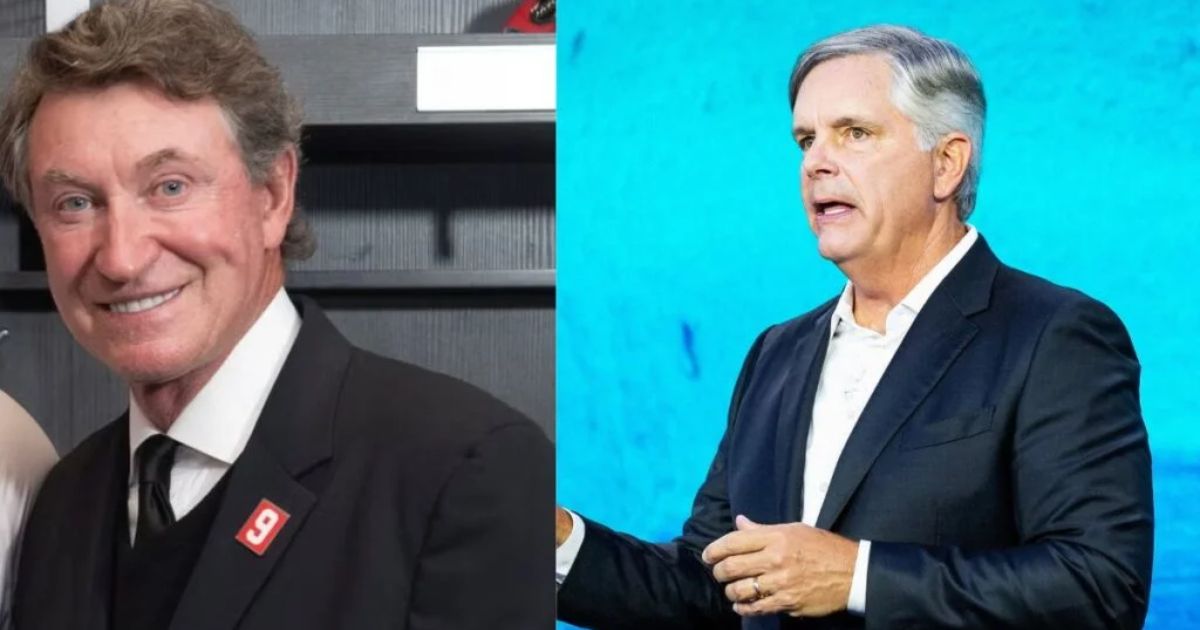
Introduction: Why Wayne Gretzky and Larry Culp Appear Together
Wayne Gretzky and Larry Culp built their careers in completely different worlds. Gretzky became an iconic professional hockey player, while Culp built his reputation as a business executive and industrial leader. At first, the two names may seem to have little in common. However, a closer look reveals an interesting theme: both careers demonstrate the importance of preparation, discipline, decision-making, teamwork, and continuous improvement. Gretzky spent two decades competing at the highest level of professional hockey. Meanwhile, Culp developed a long career in industrial management before leading General Electric through a major transformation. Their stories therefore provide two different examples of how people can build exceptional careers through focus and consistent execution.
Quick Bio: Wayne Gretzky and Larry Culp
| Detail | Wayne Gretzky | Larry Culp |
|---|---|---|
| Full Name | Wayne Douglas Gretzky | H. Lawrence Culp Jr. |
| Known For | Professional ice hockey | Business leadership |
| Field | Sports / Hockey | Industrial Business |
| Nationality | Canadian | American |
| Profession | Former NHL Player | CEO / Business Executive |
| Major Organization | Edmonton Oilers, Los Angeles Kings | Danaher, General Electric, GE Aerospace |
| Career Highlight | 4× Stanley Cup champion | Led major GE transformation |
| Nickname | “The Great One” | Larry Culp |
| Famous For | NHL scoring records and hockey legacy | Operational leadership and industrial management |
| Key Strength | Anticipation and playmaking | Strategy and operational execution |
Who Is Wayne Gretzky?
Wayne Gretzky is a Canadian former professional ice hockey player who became one of the most influential figures in NHL history. Born on January 26, 1961, in Brantford, Ontario, he developed his skills from an early age. His father, Walter Gretzky, built a backyard rink where Wayne practiced for countless hours. Consequently, his early environment encouraged both repetition and creativity. Gretzky entered the NHL with the Edmonton Oilers for the 1979–80 season and eventually played for the Los Angeles Kings, St. Louis Blues, and New York Rangers. He retired in 1999 after 20 NHL seasons. The NHL lists him among its most accomplished players, with remarkable career totals and numerous records.
Wayne Gretzky’s NHL Career
Gretzky’s professional career stands out because of its extraordinary statistical production. During 1,487 regular-season games, he recorded 894 goals, 1,963 assists, and 2,857 points. Those numbers remain central to his historical legacy. Furthermore, his playoff totals add another remarkable layer, with 208 postseason games, 122 goals, 260 assists, and 382 points. The NHL record database continues to list Gretzky at the top of the career points leaderboard when regular-season and playoff totals are combined. His achievements were not limited to scoring, either. He won four Stanley Cups with Edmonton and collected numerous individual awards. Therefore, his career represents an unusual combination of individual performance, team success, consistency, and longevity at the highest level.
Gretzky’s Record-Breaking Achievements
Gretzky changed the statistical landscape of professional hockey. For example, he established single-season records of 92 goals, 163 assists, and 215 points. He also produced 15 seasons with at least 100 points, including 13 consecutive seasons. Moreover, he recorded 50 goals in only 39 games during the 1981–82 season. That achievement became one of the most memorable scoring performances in NHL history. His career also included nine Hart Trophy wins as league MVP and 10 Art Ross Trophy victories as the league’s leading scorer. Although some records eventually changed, his overall statistical impact remains extraordinary. The NHL continues to recognize Gretzky as a defining figure in the history of professional hockey.
Who Is Larry Culp?
Larry Culp, formally H. Lawrence Culp Jr., is an American business executive known for his leadership at Danaher and General Electric. He joined GE’s board in April 2018 and became GE’s CEO in October of that year. Later, in June 2022, he also became CEO of GE Aerospace. When GE Aerospace became an independent public company in April 2024, Culp became its chairman and CEO. Before joining GE, he spent many years at Danaher, where he became president and CEO and developed a reputation for operational management and continuous improvement. His career therefore differs sharply from Gretzky’s, yet both stories involve long-term preparation, demanding environments, and sustained performance.
Larry Culp’s Business Background
Culp’s leadership experience began long before his arrival at GE. He joined Danaher in 1990 through Veeder-Root and gradually accepted larger responsibilities. By 2001, he had become president and CEO of Danaher. During his tenure, the company expanded substantially, while Culp emphasized operational discipline and lean management principles. GE’s official biography says that he later brought a strong focus on customer value and improvements in safety, quality, delivery, and cost. Furthermore, Culp’s background gave him extensive experience managing industrial businesses and complex organizations. As a result, his approach at GE was shaped by years of practical management rather than by a single executive position.
Wayne Gretzky and Larry Culp: Two Very Different Career Paths
The biggest difference between Wayne Gretzky and Larry Culp is their professional environment. Gretzky operated in a fast-moving sporting environment where decisions often had to happen within seconds. Culp, by contrast, works in industrial and corporate environments where major decisions can involve years of planning, investment, restructuring, and execution. Nevertheless, both careers demonstrate the importance of recognizing opportunities early. Gretzky became famous partly because of his ability to anticipate where the puck would move. Culp’s management approach similarly emphasizes identifying operational problems and addressing them systematically. Naturally, these are not identical skills. Still, both examples show how preparation can improve decision-making when circumstances change quickly or become increasingly complex.
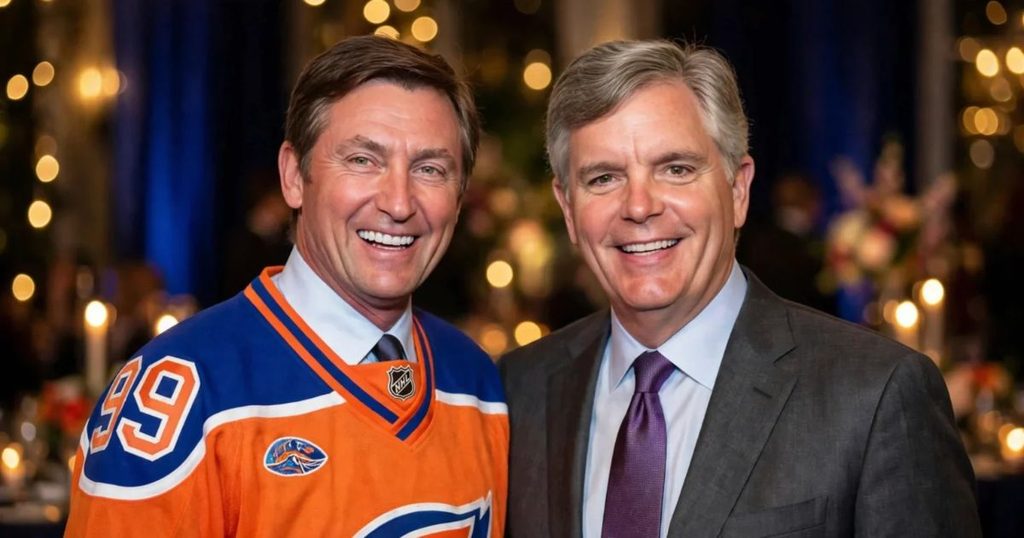
Leadership Lessons From Wayne Gretzky
Gretzky’s career offers several lessons that extend beyond hockey. First, preparation creates confidence. His early training and years of competitive experience gave him an extensive understanding of the game. Second, anticipation matters. Rather than simply reacting to the puck, Gretzky developed an ability to read developing plays and position himself accordingly. Third, teamwork remains essential. Even an exceptional player cannot win championships without effective teammates, coaches, and systems. Additionally, Gretzky’s career shows why consistency matters more than one spectacular performance. His records accumulated over many seasons. Consequently, his story can be viewed as an example of how talent becomes more powerful when combined with practice, awareness, teamwork, and sustained effort.
The Importance of Anticipation
One of the most recognizable ideas associated with Gretzky is the importance of anticipating where opportunities will develop. Hockey moves quickly, so players cannot always wait for an opportunity to become obvious. Instead, they need to read the movement of teammates, opponents, and the puck. That ability helped define Gretzky’s playing style. Importantly, anticipation does not mean predicting the future perfectly. Rather, it means using available information to make an informed decision before everyone else sees the same opportunity. This principle can also apply to business, education, sports, and everyday work. Therefore, studying Wayne Gretzky and Larry Culp together can highlight how preparation helps people act before a situation becomes completely clear.
Larry Culp’s Leadership Approach
Culp’s leadership style centers strongly on operational execution. During his GE tenure, the company pursued a major transformation that simplified its portfolio and separated major businesses. GE HealthCare became an independent public company in 2023, while GE Vernova and GE Aerospace followed as GE’s industrial portfolio became more focused. GE says Culp emphasized safety, quality, delivery, and cost while moving operations closer to customers. Moreover, the company reported more than $100 billion in gross debt reduction during his tenure as GE chairman and CEO. These changes illustrate a management approach built around focus, measurable operations, and organizational restructuring rather than relying solely on broad corporate messaging.
The Role of Continuous Improvement
Continuous improvement is another important theme in Culp’s career. At Danaher, he developed experience with lean management practices. Later, he applied similar principles at GE. Rather than treating improvement as a one-time project, this philosophy focuses on identifying problems, studying their causes, testing solutions, and repeating the process. Consequently, small operational improvements can accumulate over time. Culp has also emphasized working closer to the factory floor and customers. That approach reflects a practical view of management because leaders can learn more by observing how work actually happens. In this respect, his career provides a useful business example of how systems, measurement, employee involvement, and repeated improvement can influence organizational performance.
Wayne Gretzky and Larry Culp: What Makes Their Stories Similar?
Although Wayne Gretzky and Larry Culp never built their reputations in the same industry, several broad themes connect their professional stories. Both developed expertise over many years rather than becoming successful overnight. Likewise, both operated in environments where teamwork mattered. Gretzky needed strong teammates and coaches, while Culp depends on employees, engineers, managers, suppliers, and customers to execute corporate strategies. Furthermore, both careers show the importance of making decisions based on information and experience. Gretzky read the movement of a game. Culp studies operational and business conditions. In both cases, success requires more than ambition. It requires preparation, observation, adaptability, and the ability to turn decisions into action.
Comparing Their Definitions of Success
Success looks different when viewed through the careers of these two figures. For Gretzky, success can be measured through championships, awards, scoring records, longevity, and influence on hockey. His four Stanley Cups and enormous statistical totals provide clear examples. For Culp, success is connected to organizational performance, strategic transformation, financial structure, operational execution, and the development of focused businesses. GE’s transformation under his leadership resulted in three independent public companies: GE HealthCare, GE Vernova, and GE Aerospace. However, these measurements should not be treated as directly comparable. A professional athlete and a corporate executive face different goals, risks, responsibilities, and time horizons. Therefore, their achievements need to be understood within their respective fields.
Why Teamwork Matters in Both Careers
Teamwork provides another useful connection between these professional journeys. Gretzky was an extraordinary individual player, but hockey remains a team sport. His Stanley Cup championships came while playing within highly talented Edmonton teams. Similarly, Culp’s corporate results depend on thousands of employees working across manufacturing, engineering, finance, sales, service, and management functions. A CEO cannot personally operate every factory or make every technical decision. Instead, effective leadership requires setting priorities and creating systems that help other people perform. Therefore, both careers demonstrate an important principle: individual excellence can create opportunities, but teams convert those opportunities into sustained results. That lesson applies well beyond hockey and corporate management.
The Importance of Adaptability
Adaptability also appears throughout the stories of Wayne Gretzky and Larry Culp. Gretzky played for four NHL organizations during his career and experienced different teammates, coaches, systems, and competitive situations. He also transitioned from the Edmonton Oilers to the Los Angeles Kings, helping expand hockey’s profile in Southern California. Culp, meanwhile, entered GE during a period of significant organizational and financial pressure. He then helped oversee a transformation that changed the structure of the company. Neither career followed one simple path. Instead, both required adjustments to new environments. Consequently, their professional histories demonstrate why adaptability can matter as much as technical skill when circumstances change.
Gretzky’s Influence Beyond Hockey
Gretzky’s impact extends beyond his playing statistics. His move to Los Angeles helped bring greater attention to hockey in a market that did not have the same historical hockey culture as Canada. Furthermore, his public profile made him an ambassador for the sport long after his retirement. The NHL appointed him as its Centennial Ambassador for the league’s 2017 celebrations. He was also inducted into the Hockey Hall of Fame in 1999, the same year he retired. Additionally, the NHL retired his No. 99 league-wide, making it an especially significant honor. These achievements demonstrate how a successful athlete can continue influencing a sport after leaving active competition.
Culp’s Impact on General Electric
Culp’s GE career has centered on transforming a large and diversified industrial organization. When he became CEO in 2018, GE faced substantial financial and operational challenges. Over the following years, the company sold or separated several businesses and moved toward a more focused structure. GE HealthCare became independent in January 2023, while GE Vernova and GE Aerospace became independent companies in 2024. Culp became chairman and CEO of GE Aerospace after its launch as a public company. Therefore, his legacy at GE is closely connected to simplification, portfolio restructuring, lean operations, and industrial focus. These changes represent a major shift from the structure of the traditional GE conglomerate.
Wayne Gretzky and Larry Culp in Popular Online Searches
The exact phrase Wayne Gretzky and Larry Culp may attract attention because search users sometimes combine unrelated names while looking for biographies, comparisons, leadership lessons, or background information. Importantly, available authoritative sources do not establish a major family, business, or professional relationship between the two. Their careers developed independently in hockey and industrial management. Therefore, readers should be cautious with websites that imply a direct partnership or personal connection without reliable evidence. A useful article can still discuss them together by examining common themes such as preparation, performance, leadership, teamwork, and adaptability. That approach provides useful context without creating a relationship that the available evidence does not support.
What Can Professionals Learn From Both Careers?
Professionals can draw several practical lessons from these two careers. First, preparation matters before opportunity arrives. Gretzky developed his skills from childhood, while Culp accumulated management experience across decades. Second, observation improves decisions. Gretzky studied the movement of a game, whereas Culp has emphasized understanding operations close to the factory floor. Third, improvement should continue even after success. Gretzky continued producing at an extraordinary level for years, while Culp continued applying operational principles across different organizations. Finally, strong performance depends on people. Neither career can be understood entirely through individual achievement. Both demonstrate how preparation, systems, relationships, and execution can combine to produce long-term professional results.
Frequently Asked Questions
Are Wayne Gretzky and Larry Culp related?
There is no widely documented evidence from authoritative sources establishing that Wayne Gretzky and Larry Culp are related. They are prominent figures from different professional fields.
What is Wayne Gretzky famous for?
Wayne Gretzky is famous for his NHL career, scoring records, four Stanley Cup championships, and extraordinary totals of goals, assists, and points.
What is Larry Culp known for?
Larry Culp is known for his executive career at Danaher and GE, including his leadership of GE’s transformation and his role as chairman and CEO of GE Aerospace.
Did Wayne Gretzky work for GE?
There is no reliable evidence that Gretzky worked for General Electric. His professional career centered primarily on hockey and related roles.
Did Larry Culp play professional hockey?
There is no authoritative evidence that Culp had a professional NHL career. His documented career is in industrial business leadership.
What leadership lesson connects Gretzky and Culp?
A useful common theme is preparation combined with anticipation and execution. Gretzky applied those qualities in hockey, while Culp has applied them in business operations and organizational leadership.
Why are these two names searched together?
The combined search term may reflect interest in comparing successful figures from different fields. However, readers should distinguish a search association from evidence of a personal or professional relationship.
Conclusion: What Wayne Gretzky and Larry Culp Can Teach Us
The stories of Wayne Gretzky and Larry Culp show that exceptional careers can develop in very different environments. Gretzky built a historic legacy through hockey skill, preparation, anticipation, teamwork, and consistency. Culp built his career through industrial management, operational discipline, strategic decisions, and organizational transformation. Although their professions have little direct connection, their stories share useful themes. Both demonstrate that long-term achievement requires more than natural ability or ambition. Instead, sustained results depend on learning, preparation, adaptation, teamwork, and execution. If you are studying leadership, sports history, business strategy, or career development, these two journeys offer valuable examples. Explore the lessons, apply the useful ideas to your own goals, and keep building your skills one step at a time.