
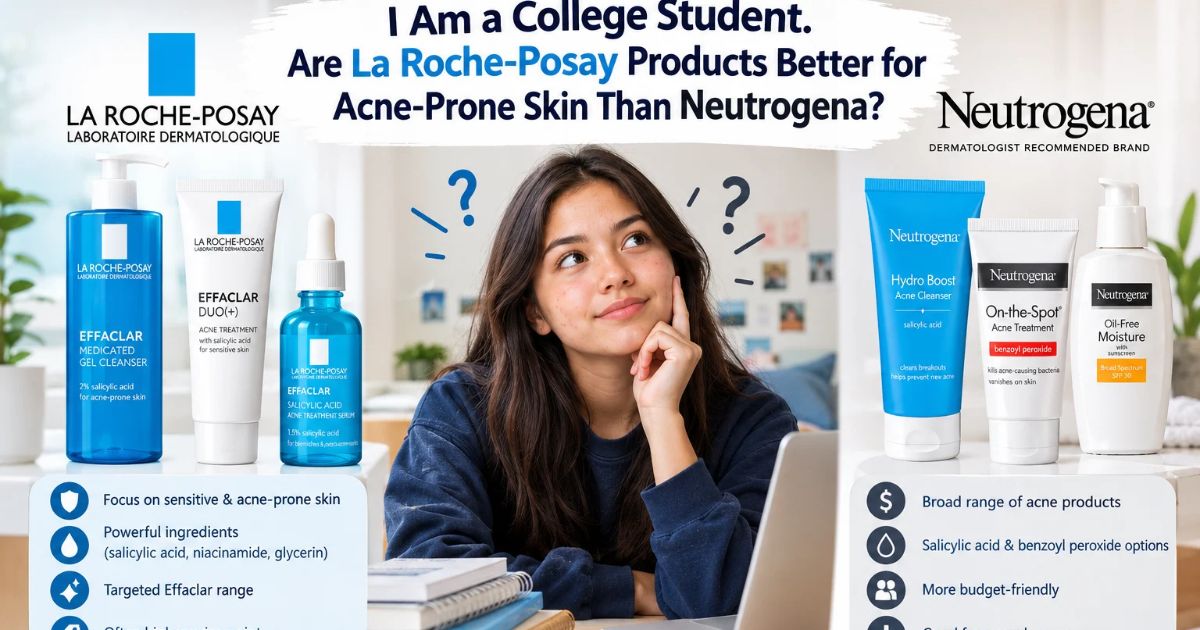
If you are a college student dealing with acne, choosing skincare can feel harder than choosing your next class. You want products that work, but you also need something practical, gentle, and affordable. That is why many students compare La Roche-Posay vs Neutrogena for acne-prone skin. Both brands offer cleansers, acne treatments, moisturizers, and other products designed for blemish-prone skin. However, they take slightly different approaches, and the better choice depends on your skin type, acne concerns, budget, and routine. La Roche-Posay has a strong focus on sensitive and acne-prone skin, while Neutrogena offers a broad selection of accessible acne products.
La Roche-Posay vs Neutrogena: Which Is Better for Acne-Prone Skin?
When comparing La Roche-Posay and Neutrogena, it is important to avoid calling one brand universally better. Acne varies from person to person, so the ingredient and formula matter more than the logo on the bottle. For example, La Roche-Posay’s Effaclar range includes products with salicylic acid, niacinamide, glycerin, and other supporting ingredients. Neutrogena also offers acne products based on ingredients such as salicylic acid and benzoyl peroxide. Therefore, both brands can fit an acne-focused routine. The real question is which formula matches your specific needs. If you have oily skin and clogged pores, one product may work well. Meanwhile, another formula may be more appropriate if your skin becomes dry or irritated easily.
What Makes La Roche-Posay Attractive for College Students?
La Roche-Posay can be appealing when acne comes with sensitivity, irritation, or an uncomfortable feeling after cleansing. Its Effaclar range is specifically designed around acne-prone skin concerns. For example, the brand’s Effaclar Medicated Acne Face Wash contains 2% salicylic acid and lipo-hydroxy acid. It also contains glycerin, which helps support skin hydration. The product is described by the brand as suitable for acne-prone and oily skin, while its product information also highlights characteristics such as being oil-free and non-comedogenic. Consequently, students who want an acne cleanser without relying on physical scrubbing may find this type of formula appealing. Still, individual tolerance matters, especially when using exfoliating ingredients regularly.
Why Neutrogena Remains a Popular Acne Choice
Neutrogena has a long-standing presence in affordable skincare, and its acne range gives students several options. The brand recommends gentle cleansing twice daily for acne-prone skin and identifies salicylic acid and benzoyl peroxide as established acne-fighting ingredients. Benzoyl peroxide can be particularly useful for inflammatory pimples, while salicylic acid is commonly used for clogged pores and surface oil. Therefore, Neutrogena can make sense for students who want a straightforward acne routine without immediately moving toward premium-priced skincare. However, affordability does not automatically mean a product will suit every skin type. Some acne treatments can cause dryness or irritation, so starting gradually and following product directions remains important. Your skin’s response should guide how frequently you use an active treatment.
Are La Roche-Posay Products Better for Sensitive Acne-Prone Skin?
If your acne-prone skin is also sensitive, La Roche-Posay may have an advantage for your particular needs, although that does not make every La Roche-Posay product better than every Neutrogena product. Several Effaclar products are positioned for acne-prone and sensitive skin. For example, the Effaclar Medicated Acne Face Wash is marketed as suitable for sensitive skin, while the Effaclar Duo+M treatment is also described as suitable for sensitive skin. These formulas can therefore appeal to students who want acne care while paying attention to skin comfort. Nevertheless, salicylic acid remains an active exfoliating ingredient, so sensitive skin can still react to it. A gentle routine, gradual introduction, and moisturizer can help reduce unnecessary irritation.
Salicylic Acid: A Key Ingredient in Both Brands
Salicylic acid deserves special attention when comparing La Roche-Posay and Neutrogena for acne. This ingredient helps exfoliate and refine the appearance of pores, making it particularly relevant for blackheads, whiteheads, and clogged pores. La Roche-Posay’s Effaclar Medicated Acne Face Wash contains 2% salicylic acid, while its Effaclar Salicylic Acid Acne Treatment Serum contains 1.5%. The brand also offers a 0.5% salicylic acid Effaclar treatment. Consequently, the strength and format can vary considerably within one brand. Neutrogena likewise uses salicylic acid across acne products. Therefore, instead of choosing a brand solely because it contains salicylic acid, compare the concentration, product type, supporting ingredients, and how your skin reacts.
Benzoyl Peroxide Gives Neutrogena Another Option
One important difference appears when you consider benzoyl peroxide for acne. Neutrogena offers acne-focused products containing benzoyl peroxide and explains that the ingredient can help address pimples and acne-causing bacteria. This option can be useful for students whose main concern involves red, inflamed breakouts rather than only blackheads and clogged pores. However, benzoyl peroxide can also be drying or irritating for some people. Therefore, more strength is not automatically better. You should follow the product directions and avoid combining several strong acne treatments at once unless a healthcare professional recommends doing so. Meanwhile, if your primary concern is congestion, salicylic acid may be a more natural starting point. The best approach depends on the type and severity of your breakouts.
Which Brand Is More Affordable for a College Student?
Budget can make a major difference when you are living on a college budget. Generally, Neutrogena offers many accessible acne products, while some La Roche-Posay products can cost more. However, price alone should not determine your decision. A cheaper cleanser that irritates your skin may ultimately become more expensive if you keep replacing it or need additional products to manage dryness. Likewise, an expensive serum is unnecessary if a simple cleanser, moisturizer, and sunscreen already meet your needs. Therefore, students should focus on the complete routine rather than one impressive product. Start with the basics, compare the active ingredients, and avoid buying several treatments simultaneously. A simple routine that you can consistently afford is usually more practical than an elaborate routine that strains your monthly budget.
La Roche-Posay Acne Products Worth Considering
La Roche-Posay’s Effaclar range offers several approaches to acne care. The Effaclar Medicated Acne Face Wash uses 2% salicylic acid and is designed to remove excess oil and impurities without relying on abrasive scrub particles. The brand also offers an Effaclar Salicylic Acid Acne Treatment Serum with 1.5% salicylic acid, glycolic acid, lipo-hydroxy acid, and niacinamide. Another Effaclar treatment uses 0.5% salicylic acid and includes ingredients such as niacinamide and glycerin. Because these products serve different purposes, students should not assume they all belong in the same routine. In fact, using multiple exfoliating products together may increase irritation. Instead, choose one appropriate active treatment first and give your skin time to adjust.
Neutrogena Acne Products Worth Considering
Neutrogena also provides several useful options for acne-prone skin. Its acne guidance recommends gentle cleansing and identifies both salicylic acid and benzoyl peroxide as common acne-treatment ingredients. Consequently, students can select products according to their main concern. A salicylic acid cleanser may make sense when clogged pores and excess oil are the primary issues. Conversely, a benzoyl peroxide product may be worth considering when inflamed pimples are the bigger problem. Nevertheless, you should read the active ingredient and directions on the exact product you purchase because formulas vary. Product names can also change over time. Therefore, check the current packaging and ingredient list rather than relying only on an old recommendation or a social media post.
Which Is Better for Oily and Clogged Skin?
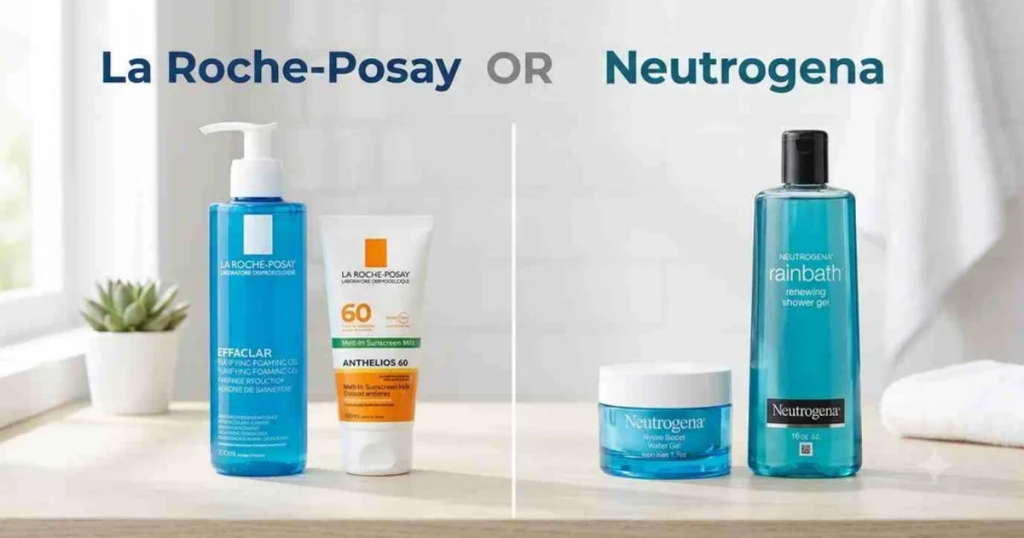
If your college routine includes oily skin, frequent blackheads, whiteheads, and clogged pores, both brands offer reasonable choices. La Roche-Posay Effaclar products are particularly focused on oily and acne-prone skin. Its 2% salicylic acid cleanser, for example, is designed to remove excess oil and impurities while addressing acne concerns. Its 0.5% salicylic acid treatment also targets blackheads, whiteheads, clogged pores, oily skin, and uneven texture. Neutrogena, meanwhile, offers acne products built around salicylic acid and benzoyl peroxide. Therefore, neither brand automatically wins. Instead, consider which active ingredient matches your main problem. If congestion dominates, salicylic acid may be useful. If inflamed pimples dominate, benzoyl peroxide may deserve consideration.
Which Is Better for Acne Marks?
Acne marks can remain even after an active breakout disappears, so college students may want a routine that addresses both current acne and leftover discoloration. La Roche-Posay’s Effaclar Salicylic Acid Acne Treatment Serum is specifically marketed for acne blemishes, pores, and post-acne marks. Its formula combines salicylic acid with glycolic acid, lipo-hydroxy acid, and niacinamide. The brand reports improvements in the appearance of post-acne marks during its product testing, although those results should not be treated as a guarantee for every person. Neutrogena also has products designed around acne treatment, but your choice should depend on the exact formula. Most importantly, daily sunscreen matters because UV exposure can make discoloration more noticeable.
A Simple Acne Routine for College Students
A good student skincare routine does not need ten products. In the morning, start with a gentle cleanser or simply rinse with water if your skin does not need cleansing. Next, use a lightweight moisturizer and finish with broad-spectrum sunscreen. At night, cleanse your face and use one acne treatment according to its directions. Then apply moisturizer to support the skin barrier. Most importantly, avoid stacking several exfoliating products simply because you want faster results. Your skin needs time to respond. Furthermore, consistency usually matters more than having a large product collection. If you choose La Roche-Posay, an Effaclar product can become the acne-treatment step. If you choose Neutrogena, select one appropriate acne active and build the rest of the routine around gentle skincare.
What Students Should Avoid
Students often make acne worse by trying too many products at once. For example, you might use a salicylic acid cleanser, an exfoliating toner, a benzoyl peroxide treatment, a scrub, and another acne serum because you want quick results. However, that approach can overwhelm your skin. Irritation can lead to dryness, burning, tightness, and more visible redness. Therefore, introduce one active product at a time. Additionally, avoid harsh physical scrubs and aggressive rubbing when you have active pimples. You should also resist picking or squeezing breakouts because that can increase the chance of marks and irritation. Instead, keep your routine simple and give each product enough time to show whether it suits your skin.
La Roche-Posay vs Neutrogena: Pros and Cons
| Category | La Roche-Posay | Neutrogena |
|---|---|---|
| Acne focus | Strong Effaclar acne range | Broad acne range |
| Salicylic acid | Multiple options | Multiple options |
| Benzoyl peroxide | Depends on product range | Strong option in acne range |
| Sensitive-skin focus | Strong | Product dependent |
| Budget | Often higher | Often more budget-friendly |
| Acne marks | Several targeted options | Depends on specific product |
| Oily skin | Strong Effaclar focus | Many suitable options |
| College-friendly | Good, especially with a simple routine | Very good for budget-conscious routines |
This comparison shows why the answer is not simply La Roche-Posay is better than Neutrogena. Instead, the right choice depends on your skin and priorities. La Roche-Posay may appeal more if you prioritize sensitive-skin considerations and targeted Effaclar formulas. Neutrogena may appeal more if price and access are major concerns or if you specifically want benzoyl peroxide options. Either way, look at the individual formula rather than assuming every product from one brand will outperform the other. Also, remember that acne products can behave differently depending on your skin type, existing routine, climate, and frequency of use.
How Should a College Student Choose Between Them?
Start by identifying your main acne concern. If you mainly have blackheads, whiteheads, oily skin, and clogged pores, a salicylic acid product from either brand may be a reasonable option. If you mainly experience inflamed pimples, a benzoyl peroxide product may deserve consideration. Next, think about sensitivity. If your skin frequently feels dry or irritated, choose a simpler routine and introduce active ingredients slowly. Then consider your budget. A routine that costs less but works comfortably for you can be a better long-term choice than a premium routine you cannot maintain. Finally, check the exact ingredient list and directions before purchasing. Product formulas can change, so current packaging should always take priority over old online recommendations.
Is La Roche-Posay Worth the Extra Cost?
For some students, yes. However, the extra cost is not automatically justified simply because La Roche-Posay has a premium reputation. Its Effaclar range offers carefully targeted acne products, including formulas for oily, clogged, and sensitive skin. Some products also combine acne-focused ingredients with ingredients intended to support comfort and hydration. Still, Neutrogena can provide effective active ingredients at a more accessible price point. Therefore, consider what you actually need. If a basic Neutrogena routine keeps your skin comfortable and controlled, there may be little reason to spend more. Conversely, if a particular La Roche-Posay formula fits your skin better, the additional cost could be worthwhile. Skin compatibility should come before brand prestige.
Can You Use Products From Both Brands?
Yes, but you should combine products carefully. There is no general reason that a cleanser from one brand cannot be followed by a moisturizer from another. However, the problem appears when you combine multiple acne actives without considering their total effect. For instance, using salicylic acid from one product and benzoyl peroxide from another may be appropriate in some routines, but it can also increase dryness or irritation. Therefore, introduce products individually and monitor your skin. A practical college routine might use a gentle cleanser from one brand, one acne treatment from the other, a basic moisturizer, and sunscreen. That approach gives you flexibility without turning your bathroom shelf into a chemistry experiment.
When Should a Student See a Dermatologist?
Over-the-counter skincare can help many people, but it is not appropriate for every acne situation. If your acne is painful, deep, widespread, repeatedly scarring, or not improving with a consistent routine, consider speaking with a dermatologist or other qualified healthcare professional. Similarly, persistent irritation, swelling, severe dryness, or an allergic-type reaction deserves professional attention. Do not keep adding stronger products simply because your acne has not improved quickly. A dermatologist can determine whether you have acne or another condition that looks similar and can recommend treatment based on your skin. Furthermore, professional guidance becomes especially useful when acne affects confidence, daily life, or leaves significant marks. Skincare should support your wellbeing rather than become another source of stress.
Frequently Asked Questions
Is La Roche-Posay better than Neutrogena for acne?
Not for everyone. La Roche-Posay may suit students who prioritize sensitive-skin formulas, while Neutrogena offers accessible acne products with ingredients such as salicylic acid and benzoyl peroxide.
Is La Roche-Posay good for oily acne-prone skin?
Yes. Several Effaclar products are specifically recommended for oily and acne-prone skin, including products containing salicylic acid.
Is Neutrogena good for college students with acne?
Yes. Neutrogena offers a broad range of acne products and generally provides accessible options for students who need a simple routine.
Which is better for blackheads?
Salicylic acid can be a useful ingredient for blackheads and clogged pores. Both brands offer salicylic acid products, so compare the exact formula rather than choosing only by brand.
Which is better for inflamed pimples?
Benzoyl peroxide is an important ingredient for treating inflammatory acne, and Neutrogena offers benzoyl peroxide acne products. However, persistent or severe inflammatory acne may require professional evaluation.
Can I use La Roche-Posay and Neutrogena together?
Yes, you can use products from both brands, but avoid unnecessarily combining several strong acne treatments. Introduce active products gradually and monitor your skin.
Should college students spend more on skincare?
Not necessarily. A simple, affordable routine that includes cleansing, appropriate acne treatment, moisturizing, and sunscreen can be more practical than an expensive routine with unnecessary products.
Conclusion: Which Brand Should a College Student Choose?
So, I am a college student. Are La Roche-Posay products better for acne-prone skin than Neutrogena? The most accurate answer is: it depends on your skin, acne type, sensitivity, and budget. La Roche-Posay can be an excellent choice if you want a targeted acne range with products designed around oily, acne-prone, and sensitive skin. Its Effaclar collection includes several salicylic acid treatments and supporting ingredients such as niacinamide and glycerin. On the other hand, Neutrogena remains a practical option for students who want accessible acne care, particularly when considering salicylic acid or benzoyl peroxide. Choose the formula that matches your skin rather than simply choosing the more expensive brand. Start simple, stay consistent, and give your skin time to respond. If your acne is persistent or severe, talk with a dermatologist for personalized advice.








One Comment