

Introduction to FintechZoom.com Economy
The economy affects almost every financial decision people make, from saving money and buying a home to investing in stocks or starting a business. FintechZoom.com Economy brings many of these economic topics together in one place. Its economy coverage includes subjects such as inflation, investments, taxation, retirement, banking, real estate, employment, and broader business trends. Therefore, readers can use the section to understand how major economic developments may influence markets and everyday financial choices. However, economic information changes quickly. A strong reader should compare important claims with official data and trusted sources before making financial decisions. This approach makes economic news more useful, balanced, and practical.
What Is FintechZoom.com Economy?
FintechZoom.com Economy refers to the economy-focused coverage published by FintechZoom.com. The section examines economic developments from different angles rather than treating the economy as a single subject. For example, recent coverage has included inflation, investment, retirement planning, taxation, real estate, banking, jobs, and international economic development. As a result, readers can move from a broad economic story to a specific financial topic without changing platforms. Moreover, the publication describes its wider coverage as connecting finance, technology, markets, business, banking, money, and the economy. That broad approach helps explain why economic news often overlaps with investing, technology, consumer spending, and business strategy.
Why Economic Coverage Matters
Economic news matters because changes in growth, prices, employment, and interest rates can influence households and companies. When inflation rises, consumers may face higher costs for food, housing, transportation, and services. Meanwhile, businesses may experience greater operating expenses and weaker demand. Similarly, interest-rate changes can affect mortgages, credit cards, business loans, savings accounts, and investment valuations. FintechZoom.com Economy can help readers follow these connections through accessible financial reporting and analysis. Nevertheless, readers should distinguish between reporting, commentary, and forecasts. An economic prediction is not a guarantee. Instead, it represents an interpretation of available information. Therefore, responsible readers should consider several indicators before forming a view about future economic conditions.
FintechZoom.com Economy and the Digital Economy
One important theme connected with FintechZoom.com Economy is the digital economy. Digital technology now influences banking, commerce, communication, manufacturing, transportation, and financial services. Earlier coverage on FintechZoom.com explained how artificial intelligence, blockchain, cloud computing, data analytics, e-commerce, IoT, and digital platforms are changing economic activity. Consequently, economic growth can no longer be understood only through traditional industries. Technology can improve productivity, reduce operating costs, create new services, and change how companies compete. At the same time, digital transformation creates challenges involving cybersecurity, privacy, employment, regulation, and unequal access. Therefore, understanding the digital economy requires both optimism about innovation and careful attention to its economic and social risks.
Technology, AI, and Economic Growth
Artificial intelligence has become a major economic theme in 2026. Companies are investing heavily in AI infrastructure, software, chips, data centers, and related services. Recent economic reporting shows that AI-related business investment has supported US economic activity, while policymakers are also watching its effects on inflation, productivity, and employment. This creates an important balance. On one side, AI may increase productivity and create new economic opportunities. On the other side, rapid investment can increase demand for energy, computing infrastructure, and specialized labor. Furthermore, automation could change some occupations faster than workers can retrain. FintechZoom.com Economy readers should therefore view AI as both a technology story and a broader economic development.
Inflation and the FintechZoom.com Economy
Inflation remains one of the most important indicators for understanding the economy. It measures how prices change over time and directly affects household purchasing power. When inflation remains high, consumers generally need more money to purchase the same goods and services. Businesses can also face higher wages, transportation costs, materials expenses, and financing costs. Recent US data showed that August 2026 personal consumption expenditures inflation increased 0.3% month over month, while core PCE inflation remained at 3.0% year over year. These figures demonstrate why inflation receives significant attention in economic reporting. FintechZoom.com Economy readers can follow inflation because it often influences monetary policy, consumer behavior, business planning, and investment expectations.
Why Interest Rates Matter
Interest rates connect monetary policy with everyday financial activity. When central banks raise rates, borrowing can become more expensive, while savers may receive better returns on certain deposits and fixed-income products. Conversely, lower rates can encourage borrowing, investment, housing activity, and consumer spending. In 2026, Federal Reserve officials have continued to focus on inflation risks, while economic growth and labor-market conditions remain important considerations. Therefore, FintechZoom.com Economy coverage of interest rates can be useful for readers following mortgages, bonds, stocks, business loans, and savings. Still, readers should avoid assuming that one rate decision automatically determines market direction. Financial markets usually respond to expectations, economic data, policy signals, and global developments together.

GDP Growth and Economic Performance
Gross domestic product, commonly called GDP, provides one of the most widely used measures of economic activity. It estimates the value of goods and services produced within an economy over a specific period. However, GDP alone cannot explain every part of economic well-being. Employment, wages, inflation, productivity, household finances, and business confidence also matter. Recent US figures illustrate this point. Second-quarter 2026 GDP growth was revised upward to a 2.2% annualized rate, while consumer spending and business investment provided important support. As a result, FintechZoom.com Economy readers should consider GDP alongside other indicators. A stronger headline number does not necessarily mean every household or industry is experiencing equally strong conditions.
Consumer Spending and Business Investment
Consumer spending plays a central role in many developed economies, particularly the United States. When households spend more, businesses may increase production, hiring, inventories, and investment. However, consumer spending can also be affected by inflation, debt levels, wages, interest rates, and confidence. Recent US data showed strong consumer spending during the second quarter and continued resilience later in 2026. Business investment also matters because companies that expand equipment, technology, infrastructure, or research can support future productivity. Therefore, FintechZoom.com Economy readers should watch both sides of the equation. Strong spending may support near-term growth, while productive investment can help determine whether that growth remains sustainable over time.
FintechZoom.com Economy and Financial Markets
Financial markets react continuously to economic information. Investors monitor inflation reports, employment figures, GDP releases, interest-rate decisions, corporate earnings, commodity prices, and geopolitical events. These developments can change expectations about company profits and future interest rates. Consequently, stocks, bonds, currencies, and other assets may move before an economic report becomes widely understood by the public. FintechZoom.com Economy can provide useful context by connecting economic developments with broader financial themes. The publication’s economy category currently includes investment, inflation, retirement, taxation, banking, jobs, and real estate topics. However, investors should remember that financial media provides information rather than certainty. Market prices can change quickly, and past performance does not guarantee future results.
Stocks, Bonds, and Economic Expectations
Stocks often respond to expectations about corporate earnings and economic growth. If investors believe companies will generate stronger profits, valuations may rise. Conversely, fears about recession, inflation, or higher borrowing costs can pressure stock prices. Bonds behave differently because their prices generally move inversely to yields. Therefore, changing interest-rate expectations can influence both markets at the same time. FintechZoom.com Economy becomes especially useful when readers want to understand why economic data matters for investments. For example, a surprisingly strong employment report could support growth expectations but also increase concerns about inflation. Thus, the same economic development can produce different effects across asset classes. Smart analysis requires looking beyond the headline and considering the broader market context.
Employment and the Labor Market
Employment provides another important window into economic health. A strong labor market can support household income, consumer spending, and business confidence. However, employment data can also reveal weakness before other indicators become obvious. Changes in hiring, unemployment, wages, participation, and job openings can influence monetary-policy decisions. Current US economic conditions show a complicated picture: economic activity remains relatively strong, while employment growth has slowed. The OECD has also highlighted slower employment growth alongside stronger productivity and AI-related investment in its 2026 US outlook. FintechZoom.com Economy readers should therefore avoid judging the labor market using one number. Instead, they should examine several employment indicators and consider how they interact with inflation and economic growth.
AI and the Future of Work
Artificial intelligence could significantly reshape the labor market over the coming years. Businesses may use AI to automate repetitive tasks, improve customer service, analyze information, and support decision-making. Meanwhile, workers may need to develop new technical and human skills as job responsibilities change. Current policymakers are already considering the uncertain effects of AI on productivity and employment. The transition may create opportunities as well as disruption. New industries can emerge, while existing roles can evolve. Therefore, FintechZoom.com Economy readers should watch workforce trends alongside technology investment. Reskilling, education, digital literacy, and adaptable career planning may become increasingly important as companies integrate AI into everyday operations.
Global Economic Trends
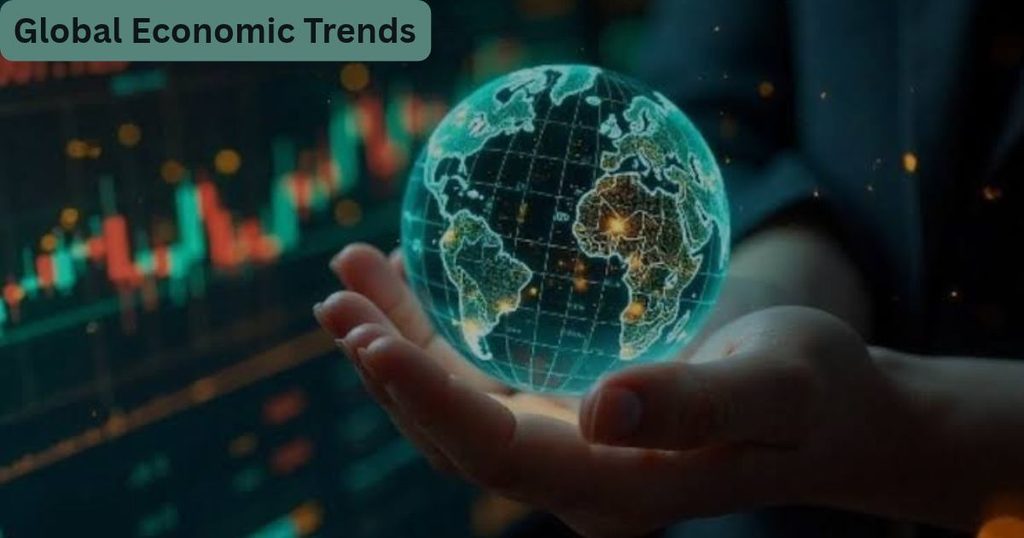
The global economy is connected through trade, energy, investment, currencies, supply chains, and financial markets. A disruption in one major region can therefore affect businesses and consumers elsewhere. Energy prices provide a clear example. Higher oil and gas prices can increase transportation and production costs, potentially creating inflation while reducing household purchasing power. The OECD has warned that energy shocks and geopolitical uncertainty could weaken consumption and increase inflation pressures. FintechZoom.com Economy readers can use global economic coverage to understand these connections. Instead of focusing only on domestic statistics, readers should consider international trade, commodity markets, currency movements, geopolitical risks, and the economic performance of major trading partners.
Emerging Markets and Economic Opportunity
Emerging markets can provide important opportunities for businesses and investors, although they also involve substantial risks. These economies may benefit from expanding populations, rising incomes, infrastructure development, digital adoption, and increasing foreign investment. Nevertheless, currency volatility, political uncertainty, debt levels, regulatory changes, and limited infrastructure can create challenges. FintechZoom.com’s economy coverage includes stories about investment and economic development in emerging markets. Such coverage can help readers understand how capital flows influence developing economies. However, every country has a different economic structure. Therefore, investors should examine local conditions rather than assuming that one emerging-market trend applies equally across every region.
Real Estate, Taxes, and Personal Finance
Economic conditions eventually reach household finances. Mortgage rates, property values, taxes, wages, insurance costs, and borrowing conditions can all change as the economy develops. Real estate, for example, often responds to interest rates because higher borrowing costs can reduce affordability. Tax policies can also influence investment, business decisions, and household budgets. FintechZoom.com Economy currently covers real estate investment, taxation, retirement, banking, and personal financial topics. Therefore, the section can be useful for readers who want to connect economic developments with practical money questions. Still, personal financial decisions require individual analysis. A general economic article cannot replace professional advice tailored to someone’s income, goals, risk tolerance, and financial circumstances.
Why Economic News Should Be Read Carefully
Financial news can be valuable, but readers should evaluate information critically. First, check whether the article provides a clear date because economic data can become outdated quickly. Next, identify whether a statement describes a confirmed fact, an estimate, or an opinion. Then, compare major statistics with primary sources such as government agencies, central banks, and international organizations. This method reduces the risk of reacting to incomplete information. FintechZoom.com Economy can serve as a starting point for understanding major developments, but it should not be the only source used for important financial decisions. Furthermore, readers should watch for sensational headlines. A dramatic market move does not always signal a lasting economic trend.
The Future of FintechZoom.com Economy
The future of FintechZoom.com Economy will likely remain closely connected with technology, markets, and changing consumer behavior. Artificial intelligence, digital payments, automation, cybersecurity, blockchain, and data analytics are already reshaping financial activity. Meanwhile, traditional economic issues such as inflation, employment, taxation, housing, and interest rates remain highly relevant. This combination makes economic journalism more interconnected than ever. FintechZoom.com’s broader platform brings economy, finance, business, technology, markets, banking, and cryptocurrency coverage together. As the global economy changes, readers will increasingly need explanations that connect individual economic indicators to real-world outcomes. Consequently, useful economic coverage should remain clear, evidence-based, current, and accessible to both experienced investors and everyday readers.
How Readers Can Use Economic Coverage
Readers can get more value from FintechZoom.com Economy by following a consistent research process. Start with the main economic story and identify the central issue. Then examine the underlying indicators, such as inflation, GDP, employment, consumer spending, or interest rates. Afterward, compare the story with information from official sources. Next, consider how the development could affect households, businesses, markets, and different industries. Finally, avoid making immediate financial decisions based on a single headline. This process encourages thoughtful analysis instead of emotional reactions. Moreover, keeping notes about major economic indicators can help readers recognize longer-term patterns. Over time, this habit can improve financial literacy and make economic news easier to understand.
Key Economic Indicators to Watch
Several indicators deserve regular attention when following the economy. Inflation shows how quickly prices are changing, while GDP provides a broad measure of economic activity. Employment data reveals labor-market strength, and consumer spending provides insight into household demand. Interest-rate decisions show how central banks respond to economic conditions. Meanwhile, bond yields, housing activity, business investment, and consumer confidence can provide additional clues. FintechZoom.com Economy readers can use these indicators together instead of relying on one figure. The most important point is context. A single statistic rarely tells the entire story. When several indicators move in the same direction, the economic signal may become clearer. However, conflicting data can indicate uncertainty or transition.
Pros and Limitations of FintechZoom.com Economy
The main advantage of FintechZoom.com Economy is its broad coverage. Readers can explore economic subjects alongside investment, banking, business, technology, and personal finance. This connected approach can make complicated financial topics easier to understand. Additionally, current economy coverage demonstrates attention to topics such as inflation, retirement, taxation, real estate, investment, and jobs. However, readers should recognize limitations. Financial journalism cannot predict markets with certainty, and individual articles may focus on a particular angle. Therefore, readers should verify important statistics, check publication dates, and consult primary sources when decisions involve significant money. A balanced approach makes the platform more useful without treating it as a substitute for independent research.
FAQs About FintechZoom.com Economy
What is FintechZoom.com Economy?
FintechZoom.com Economy is the economy-focused area of FintechZoom.com. It covers topics such as inflation, investments, taxation, retirement, banking, jobs, real estate, and economic development.
What topics does FintechZoom.com Economy cover?
The section covers economic and financial subjects including inflation, investment trends, retirement, taxation, real estate, banking, employment, and emerging-market development.
Is FintechZoom.com Economy useful for investors?
Yes. It can provide useful economic context for investors. However, readers should compare important information with official data and conduct independent research before making investment decisions.
Does FintechZoom.com cover the US economy?
Yes. FintechZoom.com covers economic and financial developments relevant to the United States as well as international markets and broader global economic trends.
Why are inflation and interest rates important?
Inflation affects purchasing power, while interest rates influence borrowing, saving, investment, housing, and business activity. Together, they provide important clues about economic conditions.
How does AI affect the economy?
AI can increase productivity, encourage investment, create new services, and change workplace tasks. However, it may also create short-term labor-market disruption and increase demand for energy and technology infrastructure.
Can economic news predict the stock market?
No. Economic news can influence market expectations, but it cannot reliably predict future stock prices. Markets also respond to company earnings, valuations, interest rates, sentiment, geopolitical events, and unexpected developments.
Conclusion: Why FintechZoom.com Economy Matters
FintechZoom.com Economy provides a useful window into the economic forces influencing businesses, investors, households, and financial markets. Its coverage connects subjects such as inflation, investment, taxation, retirement, banking, real estate, employment, and global development. At the same time, today’s economic environment shows why context matters. US growth has remained resilient, while inflation, energy costs, employment trends, interest rates, and AI investment continue to create uncertainty. Therefore, do not rely on headlines alone. Follow several indicators, verify important numbers, compare trusted sources, and think about the broader economic picture. If you want to stay informed, bookmark FintechZoom.com Economy, follow major economic indicators, and keep learning before making important financial decisions.









One Comment